Social connection isn't a solo project
Five episodes on why we are social animals, what friendship actually asks of us, and how to balance closeness with being your own person.
THE ARGUMENT
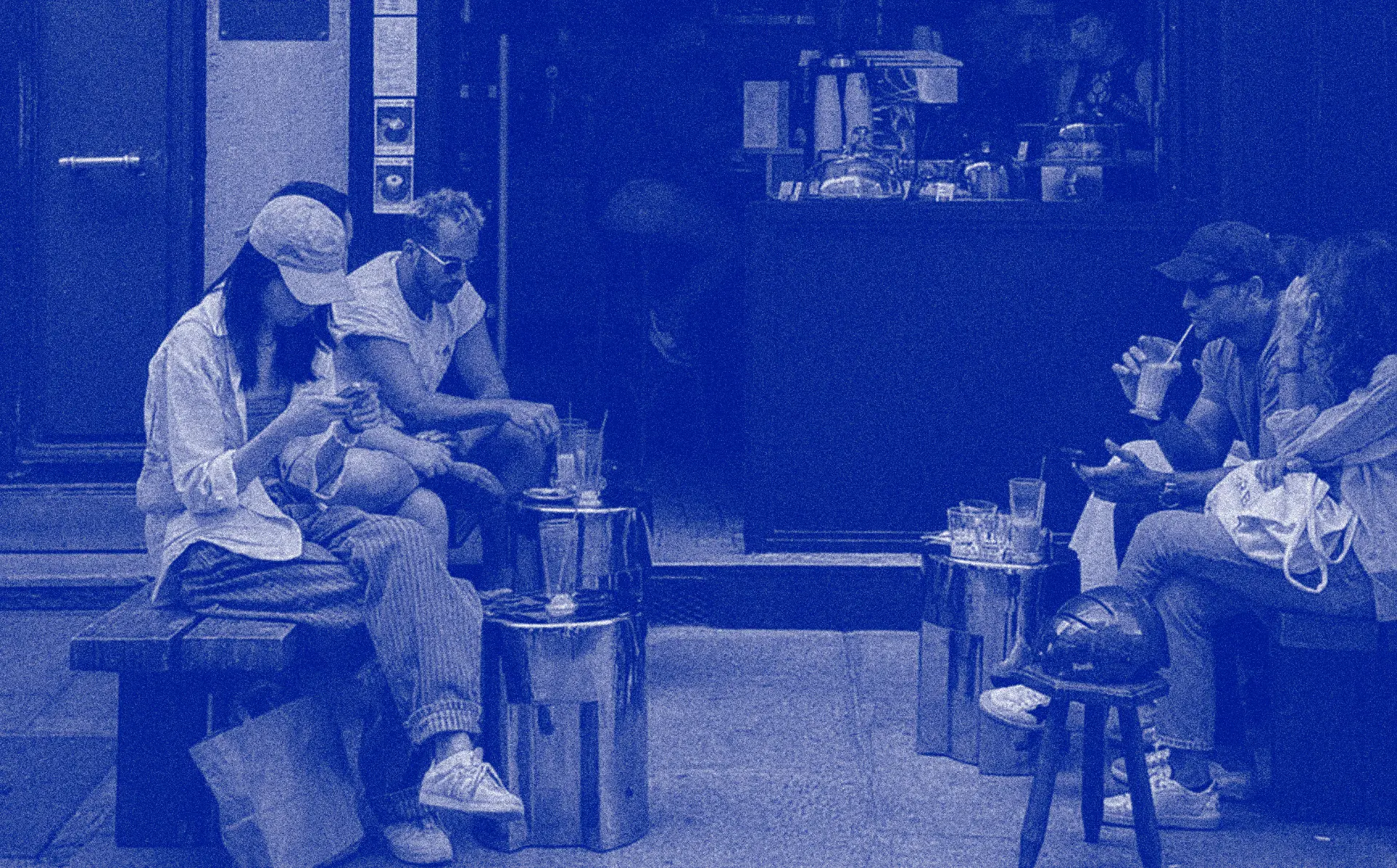
Most of the focus is on what you, the individual, can do to improve your mental health. But we are social animals. Are we missing what the group can do? Almost all the usual advice, mindfulness, exercise, counselling, asks what you can do on your own. This series turns the question around: not are you okay, but are we.
MINDING YOUR MIND
THE COST OF DISCONNECTION
Disconnection is not a fringe problem, and it is not something that only affects the old. Young people are now the loneliest age group in the country.
Loneliness is not simply unpleasant either: it is a strong predictor of depression, social anxiety and psychological distress. The modern pattern makes it easy, we no longer live in transgenerational homes, more people live alone, and city life is rarely villagey, but none of that means something is wrong with the people who feel it. It means connection has to be built rather than assumed.
Ending Loneliness Together, Youth Loneliness Report (University of Sydney). [CONFIRM EXACT REPORT TITLE AND YEAR ON PUBLISH]

THE SOCIAL BRAIN
We are wired to belong. Ask not only how you feel, but how your group feels.
Modern psychology has spent decades looking inward, at the individual self, its happiness and its plumbing. That has value, but it downplayed something older: humans are social animals, and much of our wellbeing lives in the group, not the person. To understand how someone is really doing, it helps to ask how their social world is doing too. Where do they belong, who would take care of them, what are they part of. The strongest sense of wellbeing tends to sit with people who are embedded in a group, not those managing alone.
THE COLLECTIVE
In many Aboriginal cultures, wellbeing is social and emotional first, held by the group, not the individual.
Where much of Western thinking starts with the individual, many Aboriginal cultures start with the collective. Wellbeing is understood as social and emotional together, and identity is held in a wider web of family, culture and place, an idea captured in the image of songlines, and in how tightly people stay connected. When someone struggles, the response is not to send them off alone, but for the group to wrap around them and pick up their needs as the group’s needs. It is a reminder that connection is not a private resource but a shared one.
HOW IT’S MADE
Friendship rarely just happens. You have to make it happen.
We tend to assume friendship forms by itself, and in school or early jobs it often did. Later it doesn’t. If you move towns, start somewhere new, or find your networks thinned after a separation, friends do not come knocking; you have to go out and put yourself forward. It is often easier to join a task than a room, a volunteer group, a class, a local activity, a place where you can meet people without obligation. Think of it as try before you buy. Then the part most people skip: actually following up, reaching out to the ones you click with, rather than waiting. Big groups of five or six do something different again, the looser, freer talk that helps you process everyday life.
HONEST SUPPORT
A good friend isn’t only comforting. Sometimes support means gently reflecting back what you see.
Being supportive is not the same as agreeing with everything. Someone in trouble can run down a single track and get stuck, and uncritical reassurance leaves them there. Like a good therapist, a good friend reflects rather than lectures: is that a good idea, was there anything else you could do, how did you come to that. It also means naming what you notice, gently, you seem more critical lately, I’ve seen you pulling back, because people convince themselves no one has noticed. This is active listening: not “that sounds terrible”, but reflecting things back and asking the next question. Honest, warm, and a little braver than simple comfort.
THE BALANCE
Connection and autonomy pull against each other. The work is knowing where you sit.
Connection is not the whole story; people also need autonomy, and the two pull against each other. Too little connection and you are isolated; too little autonomy and you can feel your whole identity swallowed, a strain that shows up in families and relationships, often over small daily things that pile up like raindrops. There is no single right ratio, and it is not a moral question. It is about knowing yourself: how much closeness suits you, how much independence, where you sit on the scale between team player and individual. Get that honest, and you can build a life that fits rather than one you fell into.
Social connection is not a nice extra on top of mental health; it is part of the ground it stands on. We are social animals who have to build, and rebuild, the groups we belong to, make friendship happen, support each other honestly, and balance closeness with staying our own person. Across the series we have tried to turn the usual question around: not only are you okay, but are we.