Depression is not just sadness
Five episodes on what depression is, who it affects, why the physical symptoms matter, and what helps.
THE APA DEFINITION
“Depression is a common and serious mental disorder that negatively affects how you feel, think, act, and perceive the world.” That is how the APA defines it, and it is accurate as far as it goes. But it is also where most definitions stop. This series starts there and keeps going, into the parts that get missed.
WHAT IT IS
Almost all of us can feel sadness, grief, regret and dread, and feeling those things is a normal part of being human, not the symptom of an illness.
Ian’s starting point is that distress is normal. Grief, a relationship ending or losing work should hurt, and for most people it passes with rest and the support of those around them. Depression works differently. Ian describes it as a staircase rather than a sliding scale: anyone can go down a step, but some people tumble down the whole flight. The clearest sign is often a loss of interest and pleasure, and those close by tend to notice first. The diagnostic line is drawn at two weeks, but episodes often run for months.

THE STATISTICS
Nearly 39% of young Australians aged 16 to 24 had a mental disorder in the previous 12 months, up from 26% in 2007.
It is the highest rate of any age group. Across the whole adult population almost nothing moved over the same period, holding at roughly one in five. The rise is concentrated in the young. The 2020–2022 National Study of Mental Health and Wellbeing found that 42.9% of people aged 16 to 85 had experienced a mental disorder at some point in their life. Anxiety was the most common group. Fewer than half saw a health professional about it.
Australian Bureau of Statistics, National Study of Mental Health and Wellbeing, 2020–2022.
THE OVERLAP
Anxiety is noise, movement and escape while depression is withdrawal and stopping, and yet the most common form of depression is the two at once.
On the surface they look like opposites. One speeds you up, the other shuts you down. But they overlap far more than that picture allows. The most common presentation is anxious depression, where both patterns run together: the restlessness and the flatness at the same time. It is why someone can feel wired and exhausted at once, and why treating the two as separate opposites so often misses what is happening.
THE SWITCH
Classic depression persists for months, but atypical depression can lift and return within days, driven by a faulty switch in the body’s sleep and wake system.
Classic depression tends to sit at a fairly steady level for months at a time. Atypical depression behaves differently. It lifts and returns, sometimes within a single day, so a person can seem well one moment and sink the next. The mechanism appears to be a disruption of the body’s internal clock, a fault in the system that governs sleep and wakefulness. It is increasingly described as circadian depression, and it reframes the illness as something rhythmic and biological rather than purely emotional. Understanding depression as a timing problem, not only a mood problem, changes what treatment can sensibly target.
THE MISMATCH
The medication most people are given was built for one half of depression, and the low energy, low activation kind sits in the other.
SSRIs act on serotonin, the system tied to anxiety and obsessional thinking, and for that side of depression they can help a great deal. But there is another side: the low energy, low activation kind, marked by fatigue and difficulty starting or moving. That sits closer to dopamine and noradrenaline, the systems behind energy, movement and drive, and it is not what serotonin drugs were designed for. This is where the question of stimulants comes in. They can give a short-term lift, but their long-term role in treating depression remains unproven. It is an open question, not a settled one.
TWO PATTERNS
Some illnesses build steadily while others lift after months and return later, which is what makes recovery so hard to read.
Not every illness follows the same course. Some progress in one direction. Others run in episodes, lifting after months and returning later, with clear stretches of wellness in between. That makes recovery difficult to interpret. When someone gets better after treatment, there is often no way to tell whether the treatment worked or whether the illness was simply running its course and would have lifted anyway. That uncertainty is not a failure of care. It is a feature of conditions that come and go, and it is worth being honest about when we talk about what getting better really means.
THE BOOK
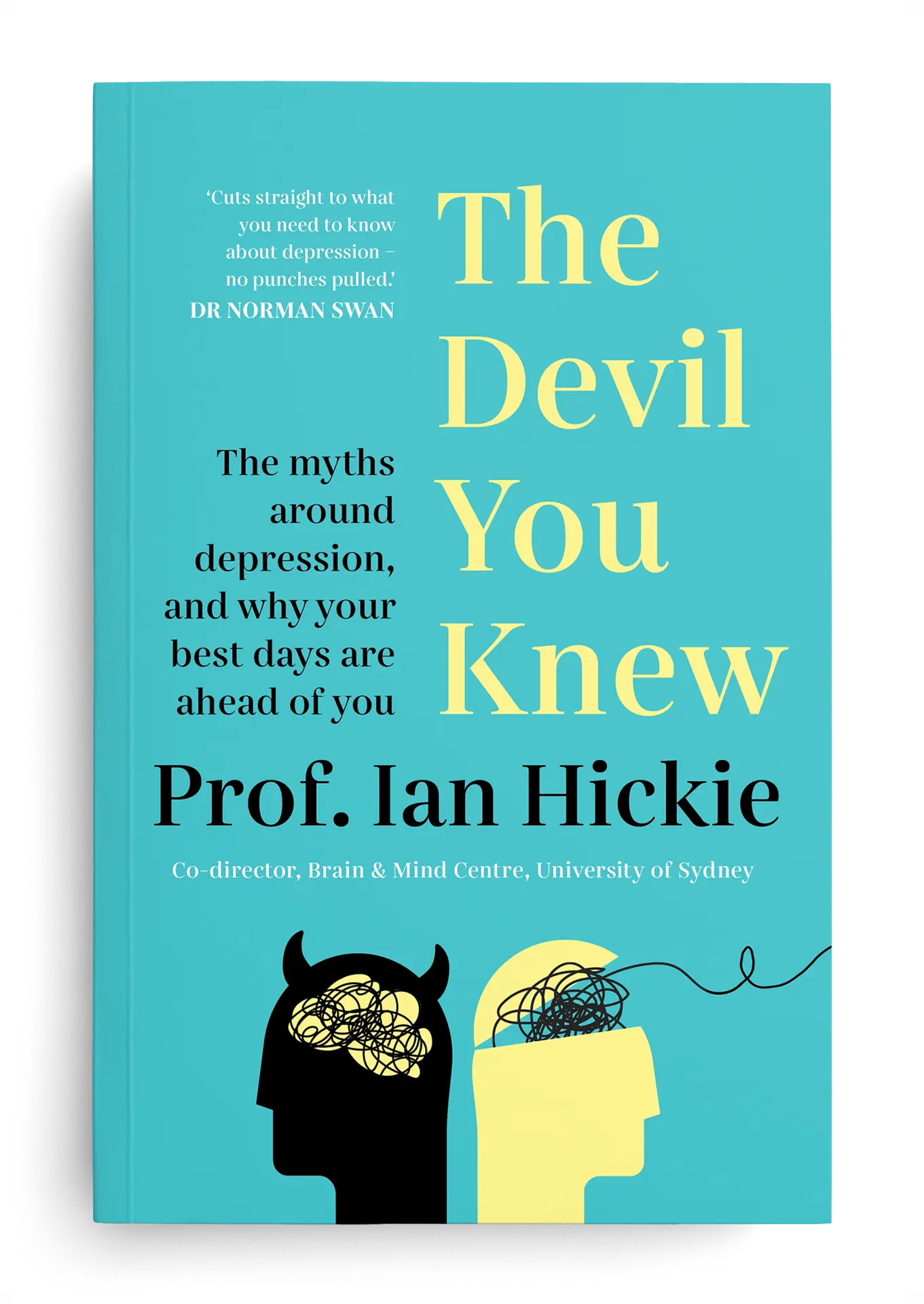
Ian wrote a whole book on depression, its myths, and why your best days can be ahead of you.
The series draws on Ian’s book, The Devil You Knew. He wrote it because when people are in the middle of depression, and the families beside them, they often don’t know enough to navigate the health system and push for good, personalised care, and the information online is a chaotic mix of the useful and the plainly wrong. The book is a plain-language guide to what depression actually is, what causes it, and the treatments that genuinely work. This episode is a conversation about it.
Depression is more varied, more physical and more unpredictable than the single story of sadness allows. Across the series we have tried to show the versions that get missed, and to be honest about how much is still uncertain.