Body clocks keep our time
Four episodes on the body clock, why sleep and timing shape mood, and what actually keeps the rhythm steady.
THE RESEARCH
“One plausible pathophysiological pathway is disturbance in the 24 h sleep-wake cycle and the underlying circadian system.” In plainer words: your mood, energy and sleep all run on the same daily clock. This series is about what happens when that clock drifts, and what helps.
THE STAKES
Lose enough sleep and the mind stops working. After a few days without it, people cannot tell what is real.
The body clock is not a lifestyle detail; it is load-bearing. One bad night already dulls your thinking and sours your mood. Push further, and it gets dangerous: sustained sleep deprivation breaks down cognition, perception and emotional control, and in the extreme, as can happen in a manic episode where someone stays awake for days, it becomes life-threatening. None of this is about willpower. It is physiology, and it runs on a roughly sixteen-hours-on, eight-hours-off cycle that the body has to reset every day to light and activity.

THE CLOCK
You run on a 24-hour cycle you cannot opt out of, and it is set every day by light and movement.
Humans do not have a precise internal clock; ours runs a little off, and we reset it daily to the turning of the Earth, through light and physical activity. Almost everything follows it: metabolism, hormones, body temperature, and the brain’s own cycle of activity and repair. When the clock is steady, you think and feel steady. Some people are naturally morning types, quick to wake and quick to sleep, with very regular days; others are evening types, slower to start. That is largely genetic when you are young, though the internal clock weakens with age, so by around thirty most of us depend far more on the external cues of light and routine to keep time.
OUT OF ALIGNMENT
In bipolar disorder the body clock falls out of alignment, and you can measure it.
One way to understand bipolar disorder is as a circadian rhythm disorder: the body clock keeps losing its alignment with the 24-hour light-dark cycle. In a manic phase a person is far more active and sleeps far less; in a down phase, far less active. And this is not only psychological. The underlying physiology drifts too, cortisol, melatonin, orexin, core body temperature, all of which normally rise and fall in a coordinated way, end up out of step with each other and with the day. Ian’s analogy is an orchestra: wellbeing is the tune, and in bipolar the players are no longer keeping time together. It is measurable in blood tests, not just in how someone feels.
KEEPING TIME
Light, caffeine and movement set the clock. The trick is getting the timing right, not cutting them out.
Most of what steadies the body clock is about timing, not willpower. In the morning, light, caffeine and exercise all help: they wake the system up and tell it the day has started. In the evening the same things work against you, light suppresses melatonin, caffeine lingers, and vigorous exercise raises cortisol and adrenaline when you are trying to wind down, so late gym sessions can make sleep harder. If you want to train, earlier is better; late afternoon is ideal. And when a stretch of short sleep is unavoidable, the aim is not perfection but protecting the rhythm where you can, and getting back to a regular pattern as soon as the demand passes.
THE RESEARCH
Ian’s new book argues the body clock sits under almost everything, not just sleep.
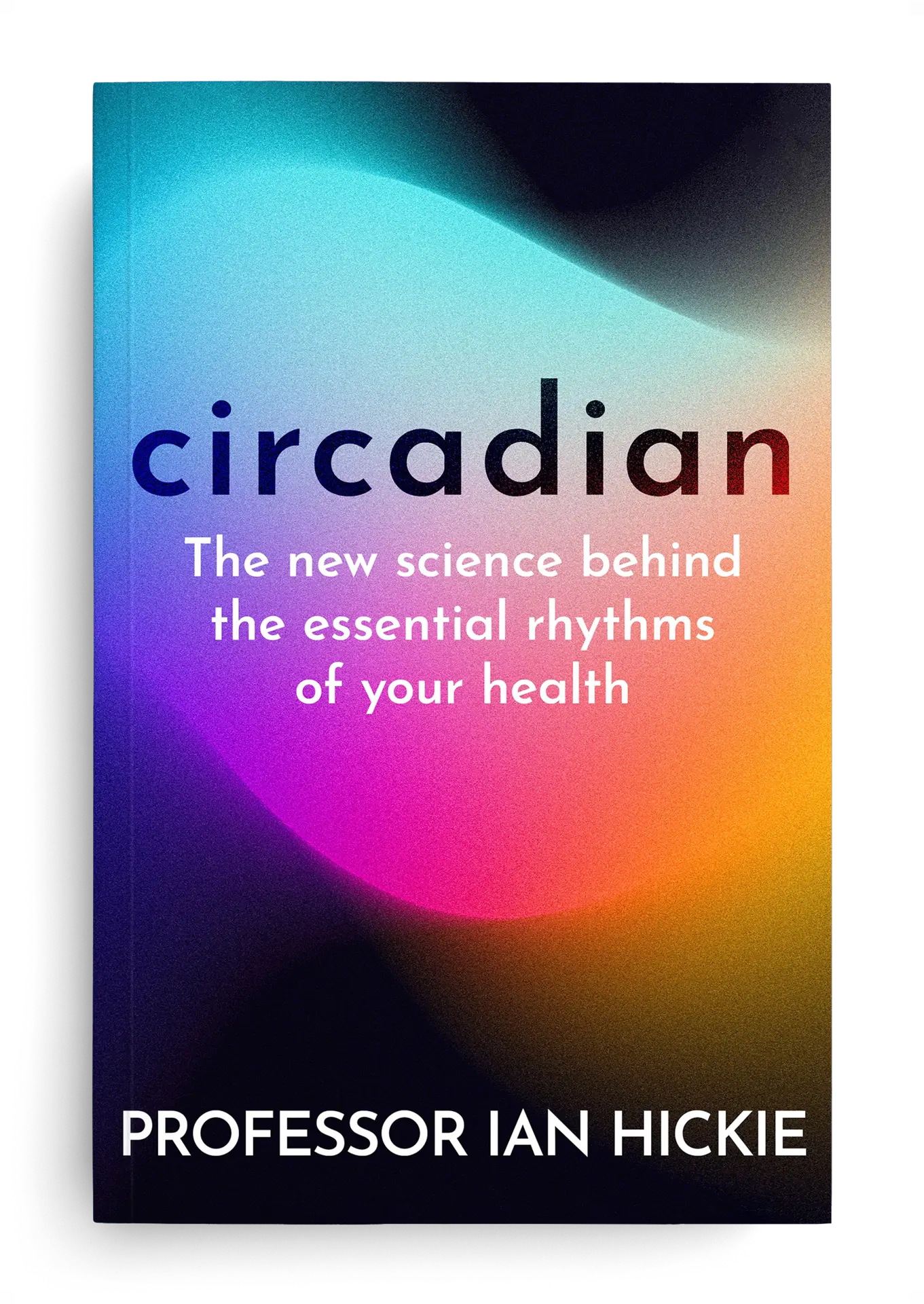
Ian’s upcoming book, Circadian, is out in March 2027. It makes the case that the body clock shapes mood, metabolism, immunity and thinking, and that artificial light, irregular meals, shift work and stress keep pulling it out of step. It focuses on four things you can change: light, sleep timing, when you eat and when you exercise. Melatonin is part of the same story, and widely misunderstood. It is not a sedative; it is the hormone that recognises darkness, rising a couple of hours before sleep to tell the body that night is coming. That makes it interesting for problems of timing rather than tiredness, such as jet lag and unstable rhythms in mood, and it is an active area of research.
Australia’s Therapeutic Goods Administration has cautioned about the over-the-counter products now common in pharmacies; anything to do with taking it is a conversation for a doctor.
Mood is not only in the mind; it keeps time with the body. Sleep, light and daily rhythm shape how we think and feel, they drift in conditions like bipolar disorder, and much of what helps is a matter of timing rather than effort. Across the series we have tried to show how the clock works, and why it is worth keeping steady.